DEA
Website and brand refresh
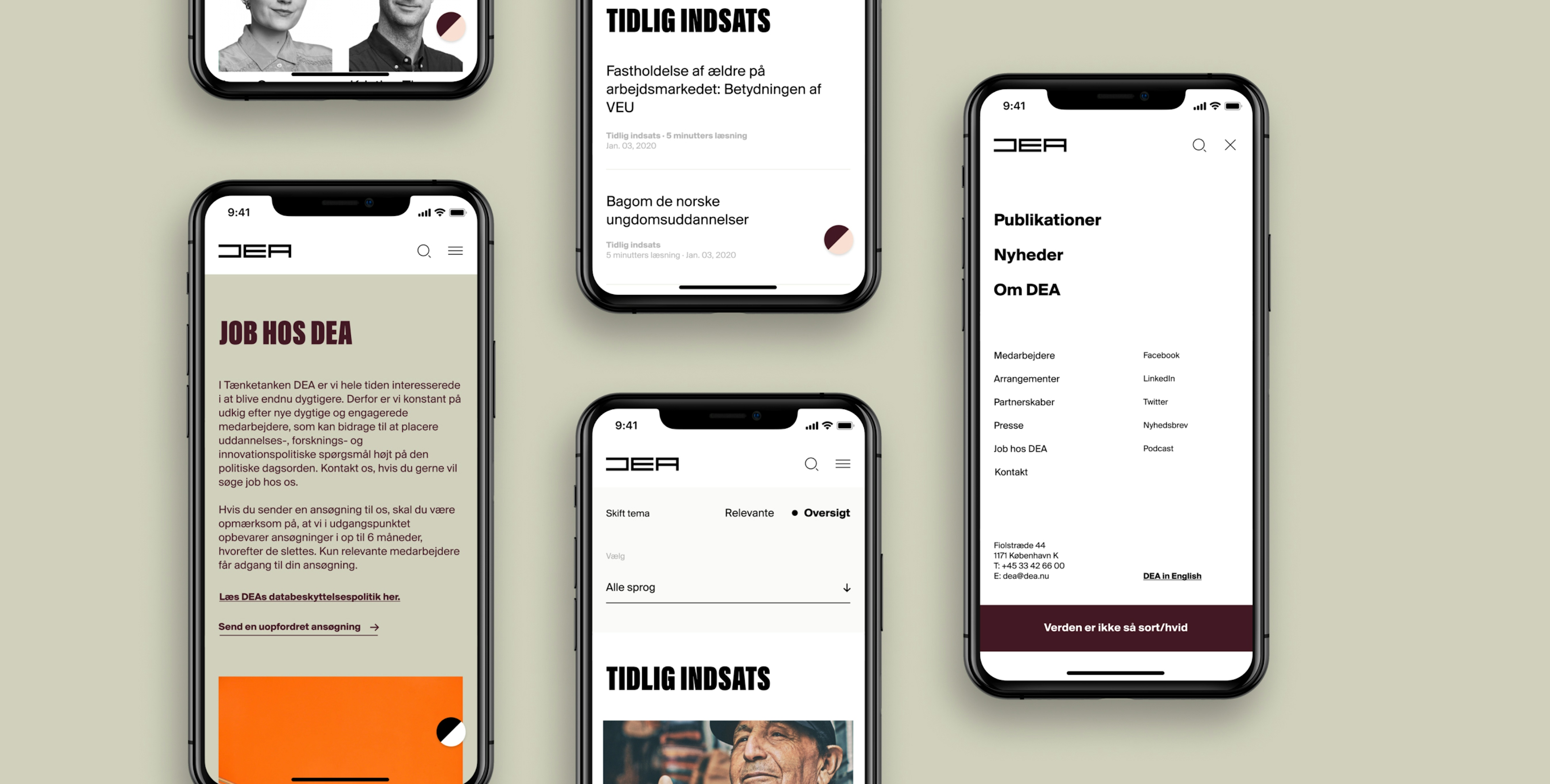
Client: DEA
Key Focus: Web & Brand
Timespan: Jan '20 - May '20
DEA is an independent, non-profit think tank based in Copenhagen. Since 2010, they've produced work advocating for the prioritization of early learning, education, research, and innovation. Their deep analysis is often showcased through long, detailed papers - with page counts upwards of 80 pages.
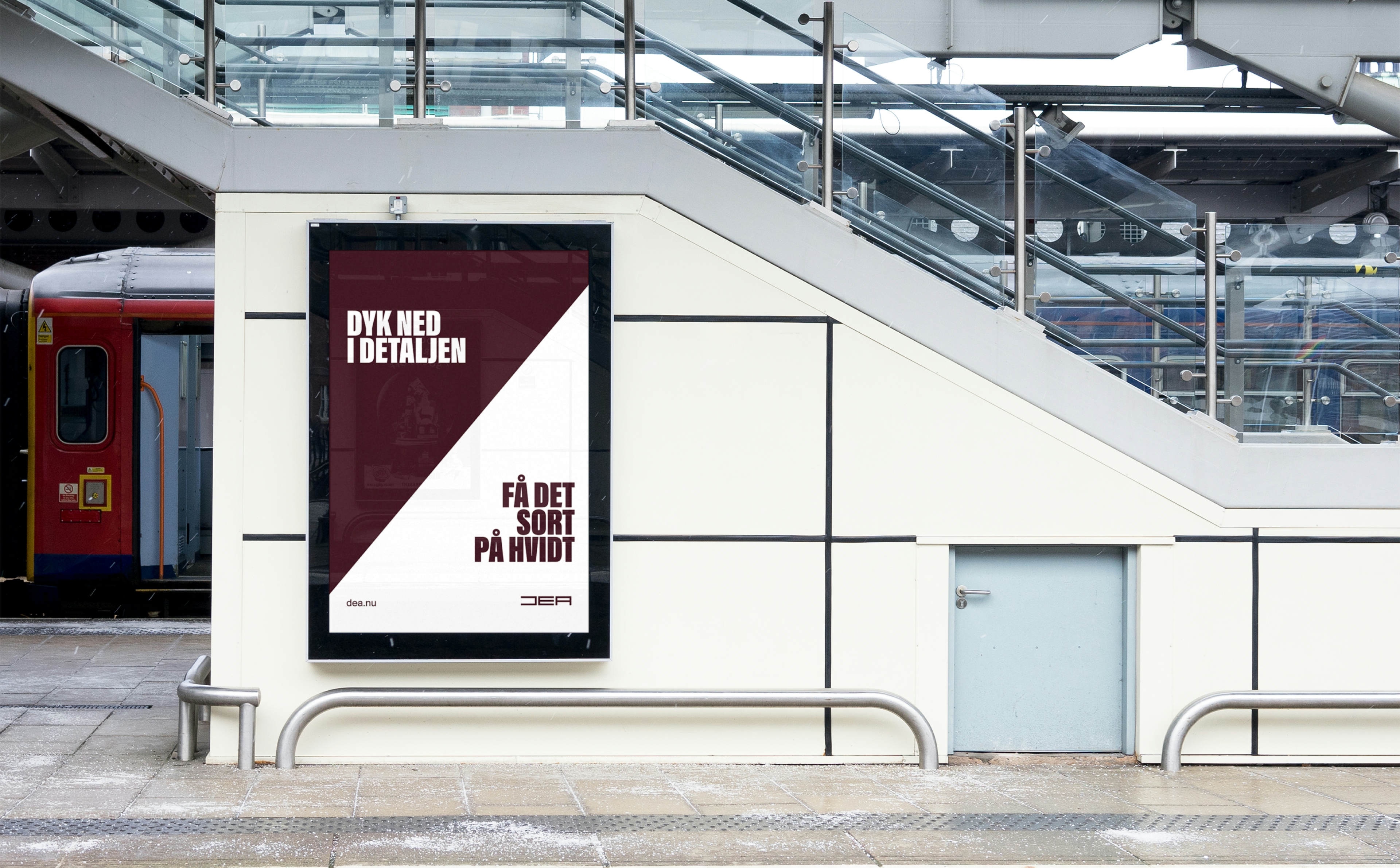
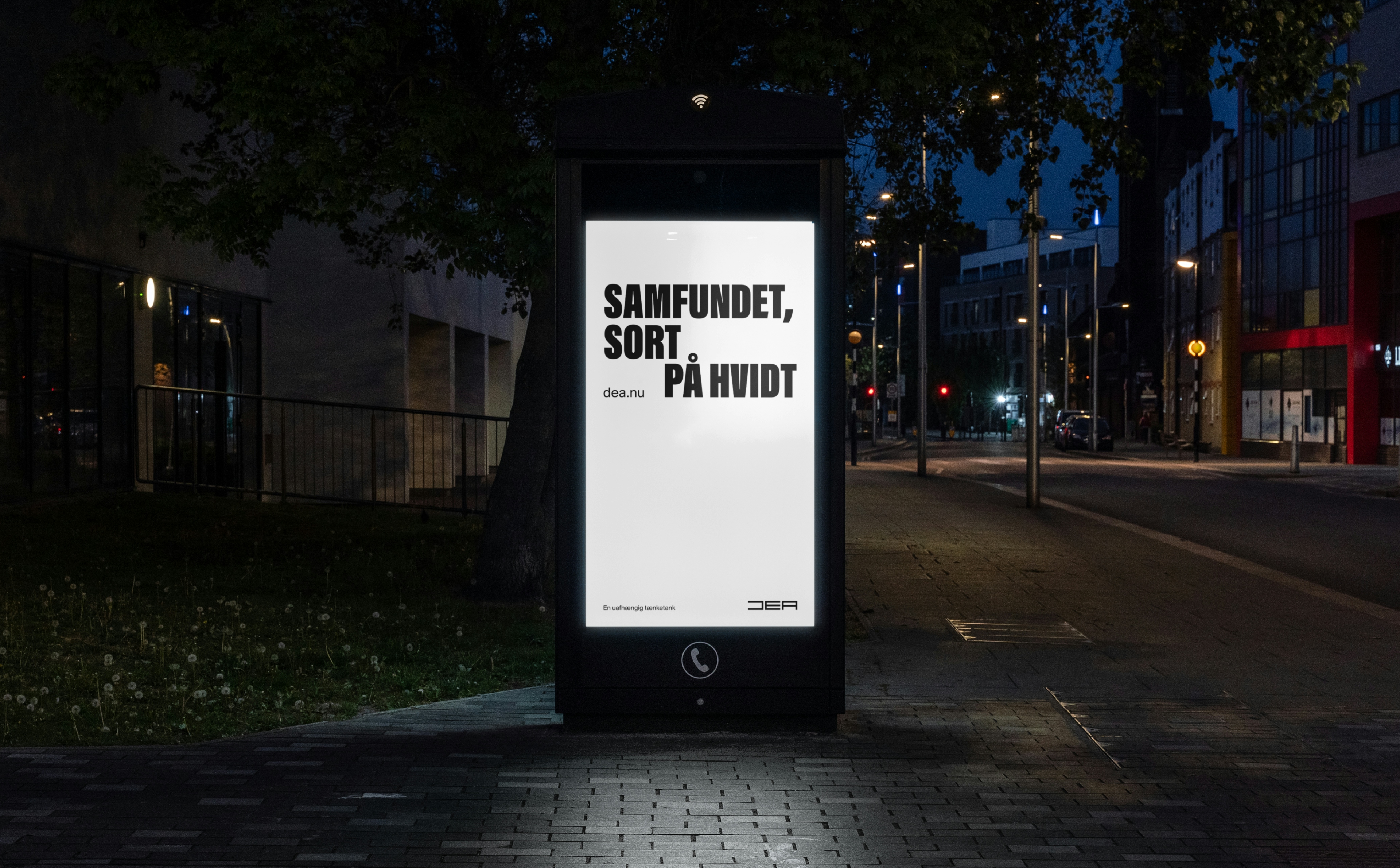
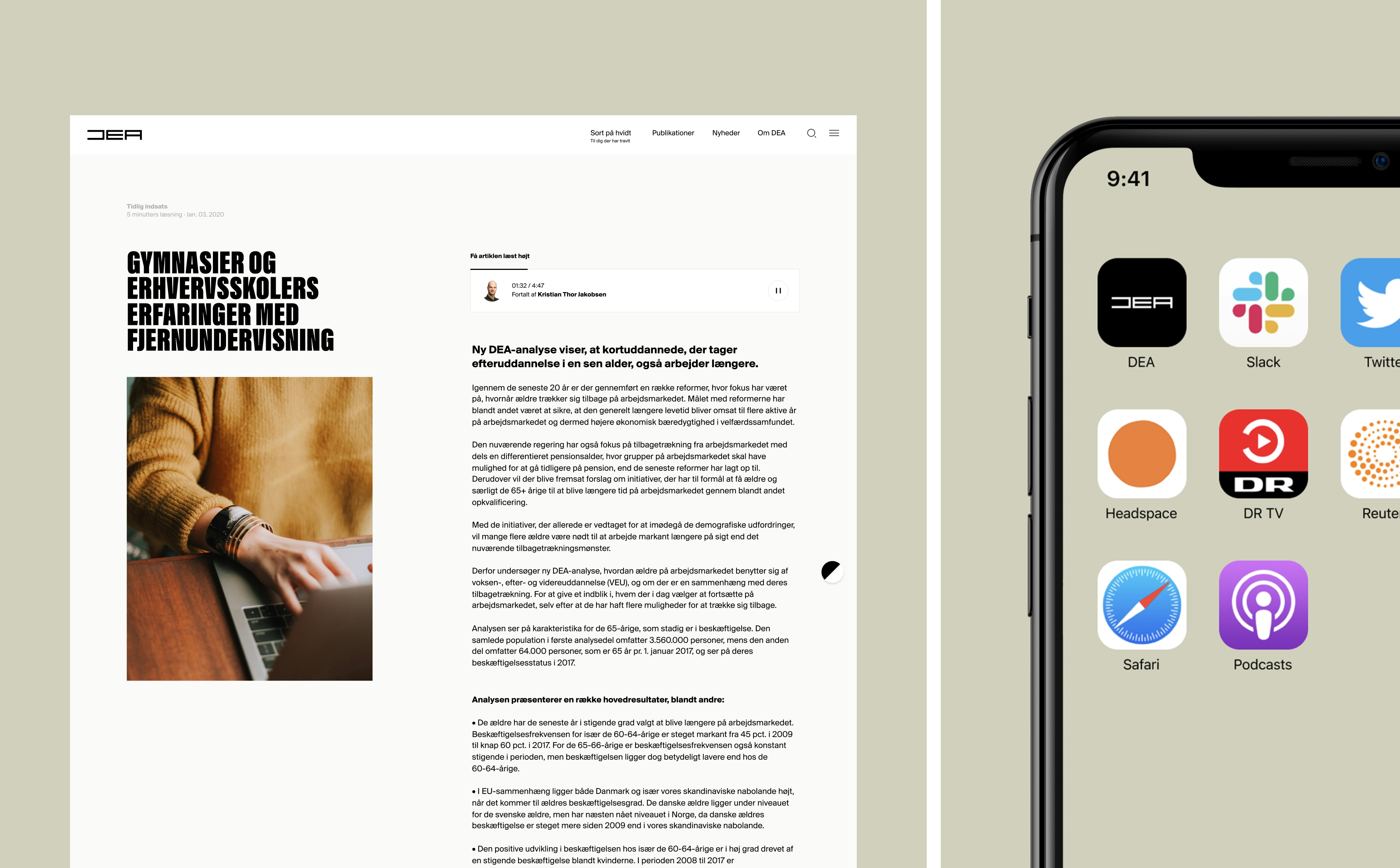
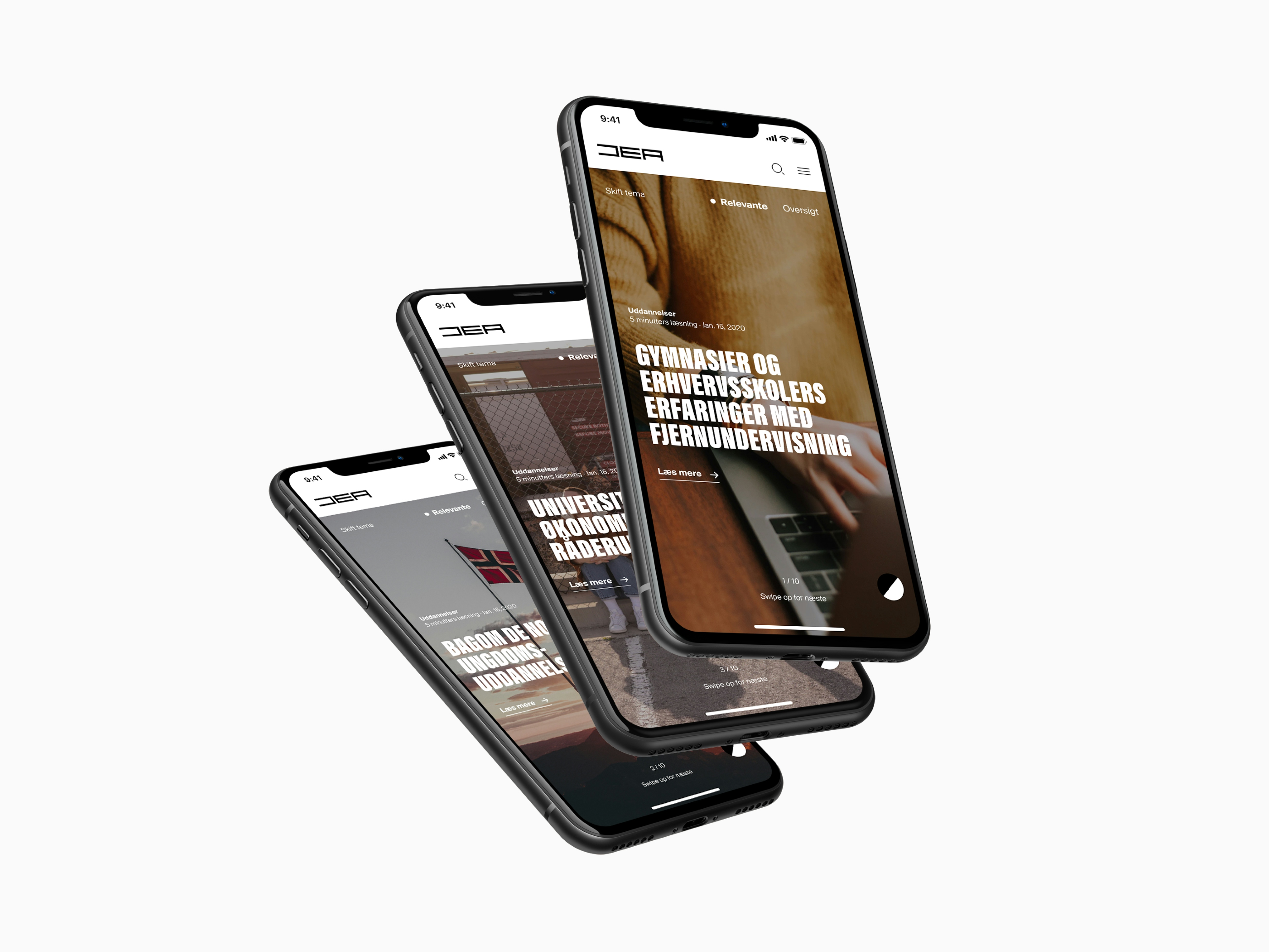
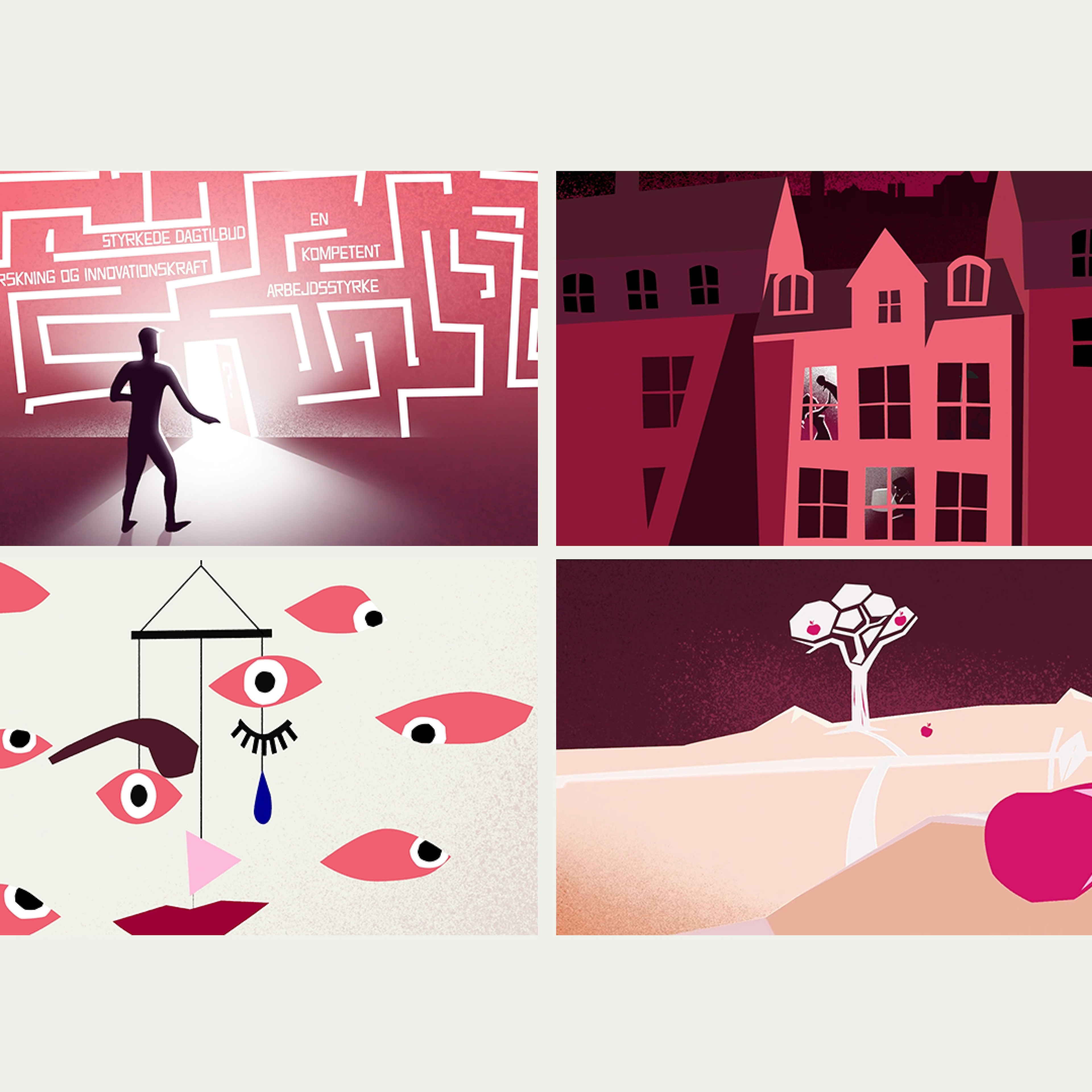
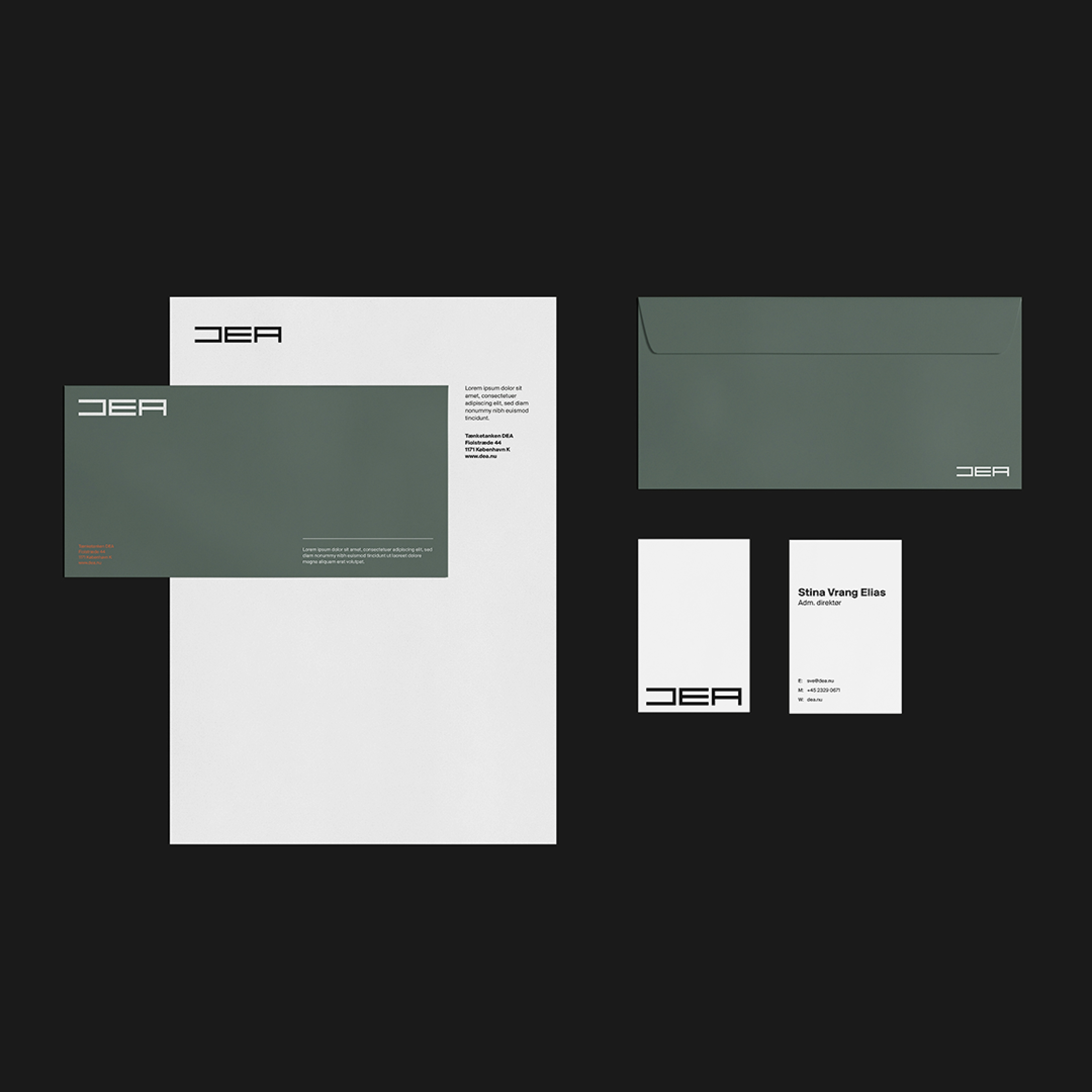
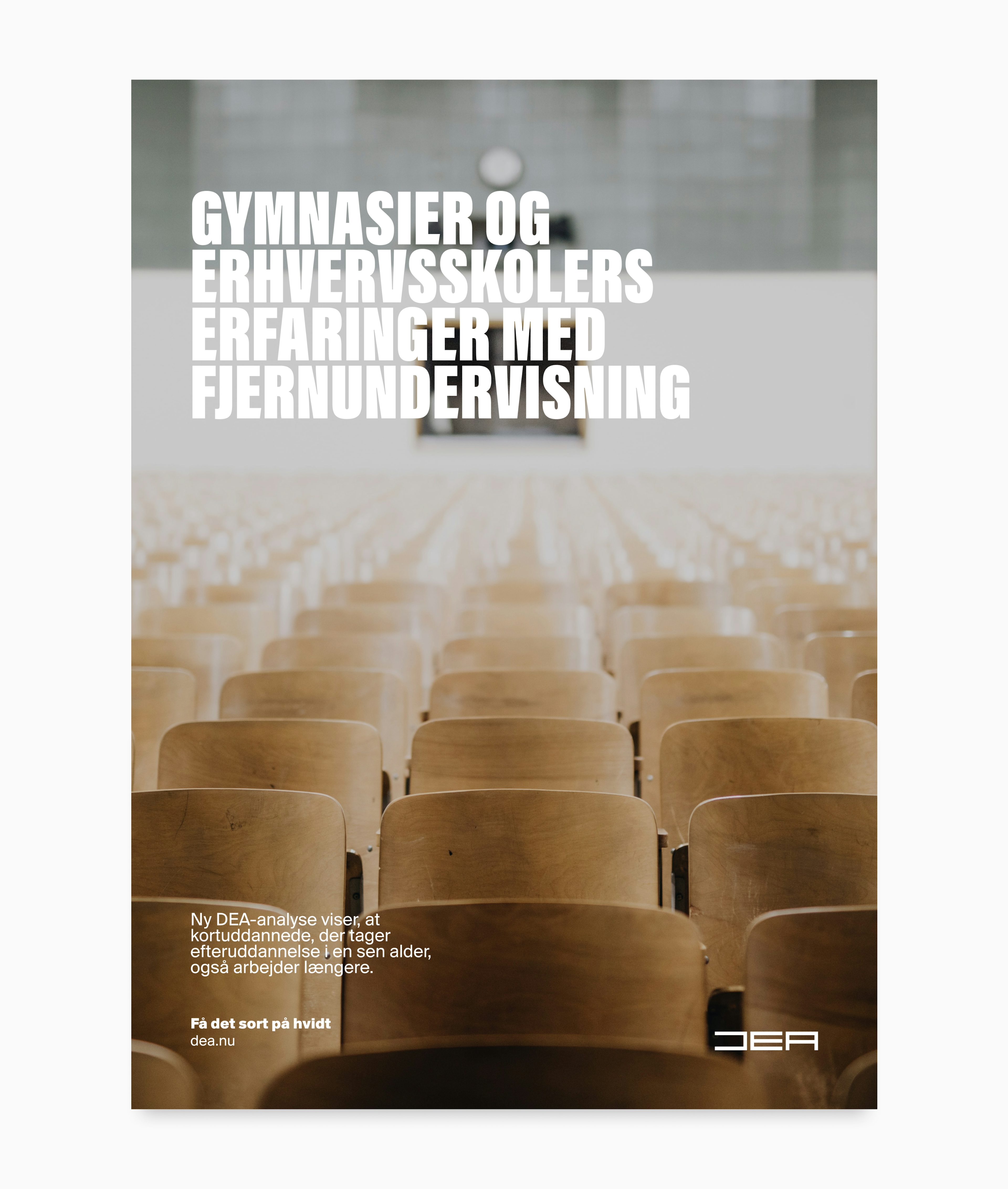
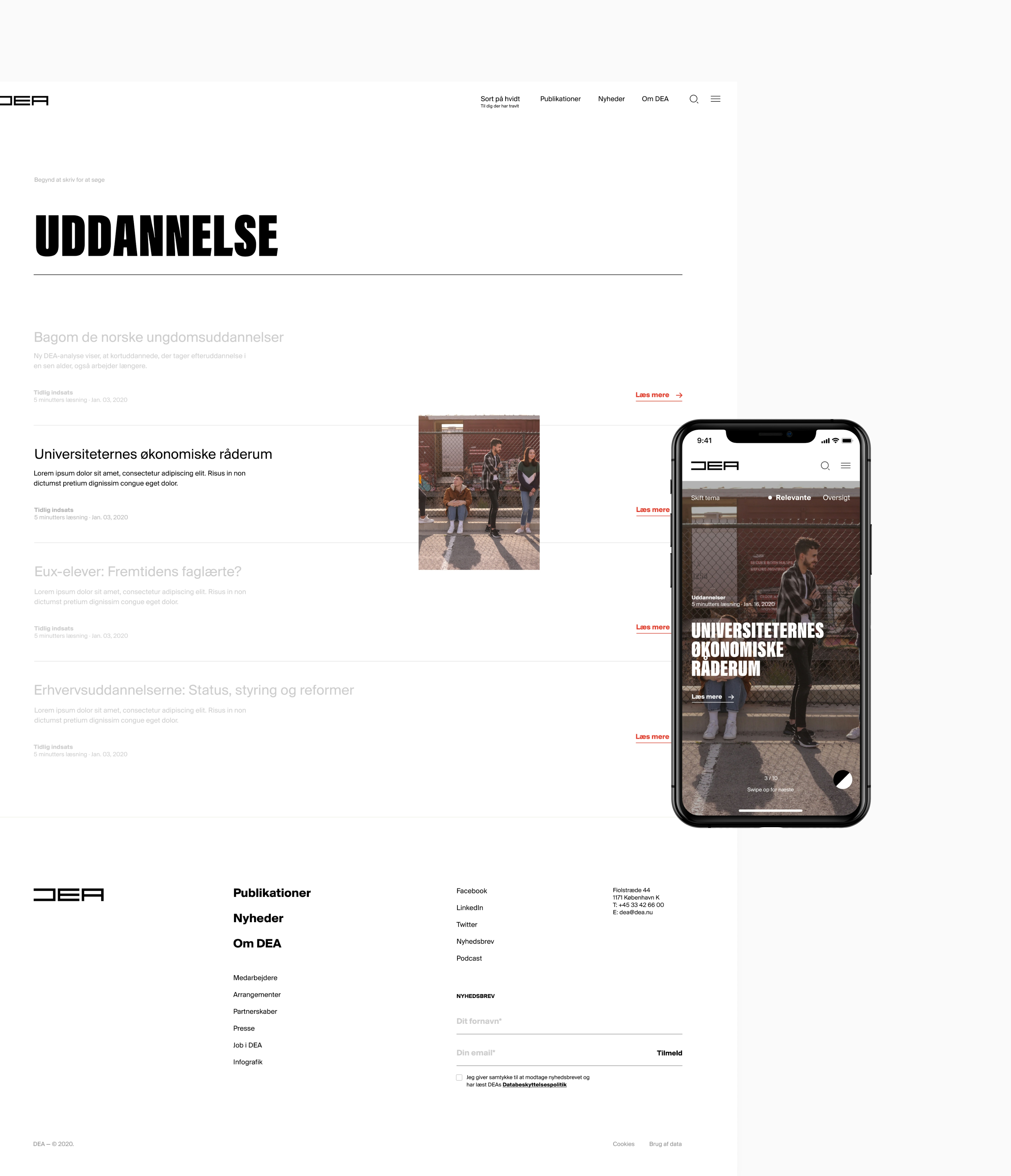
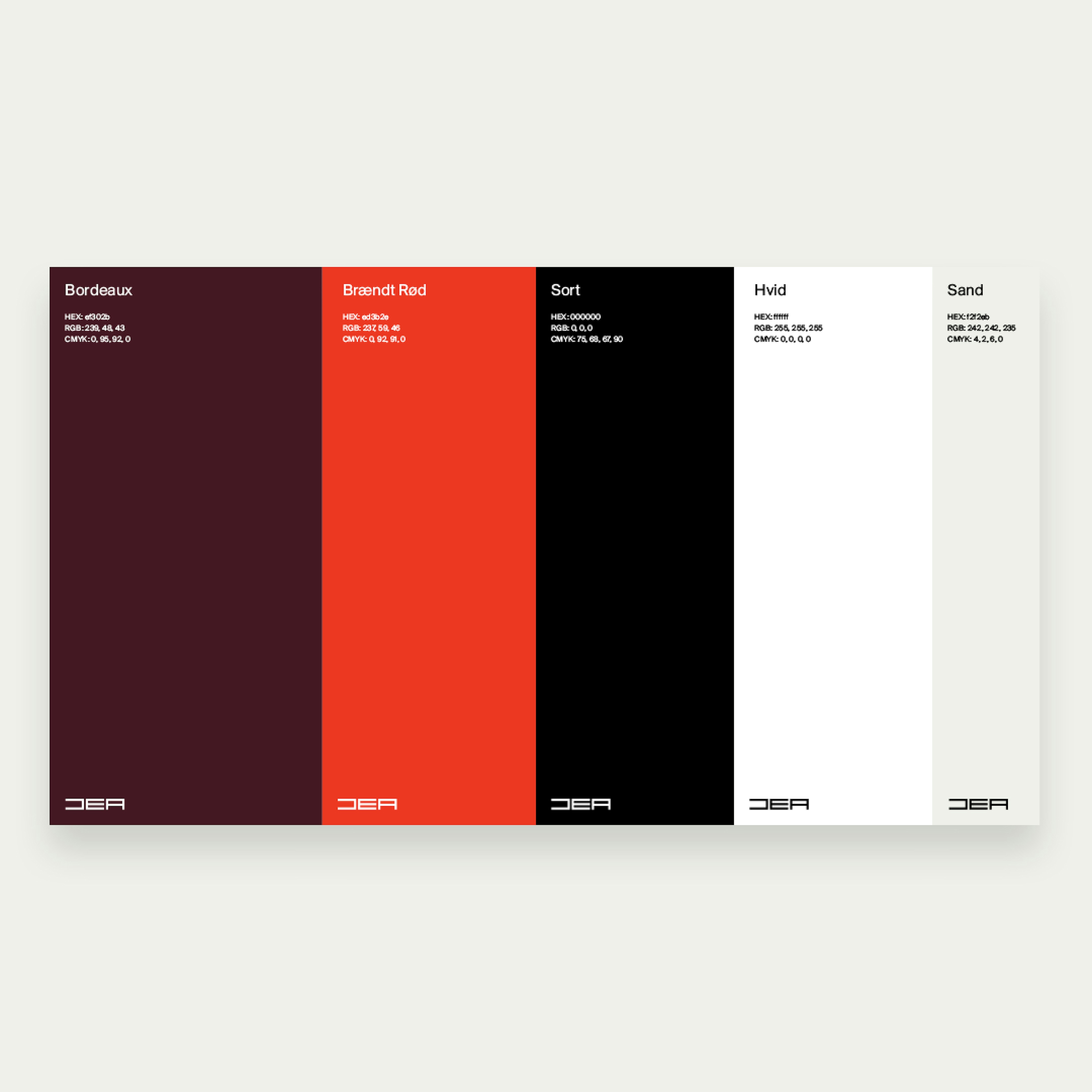
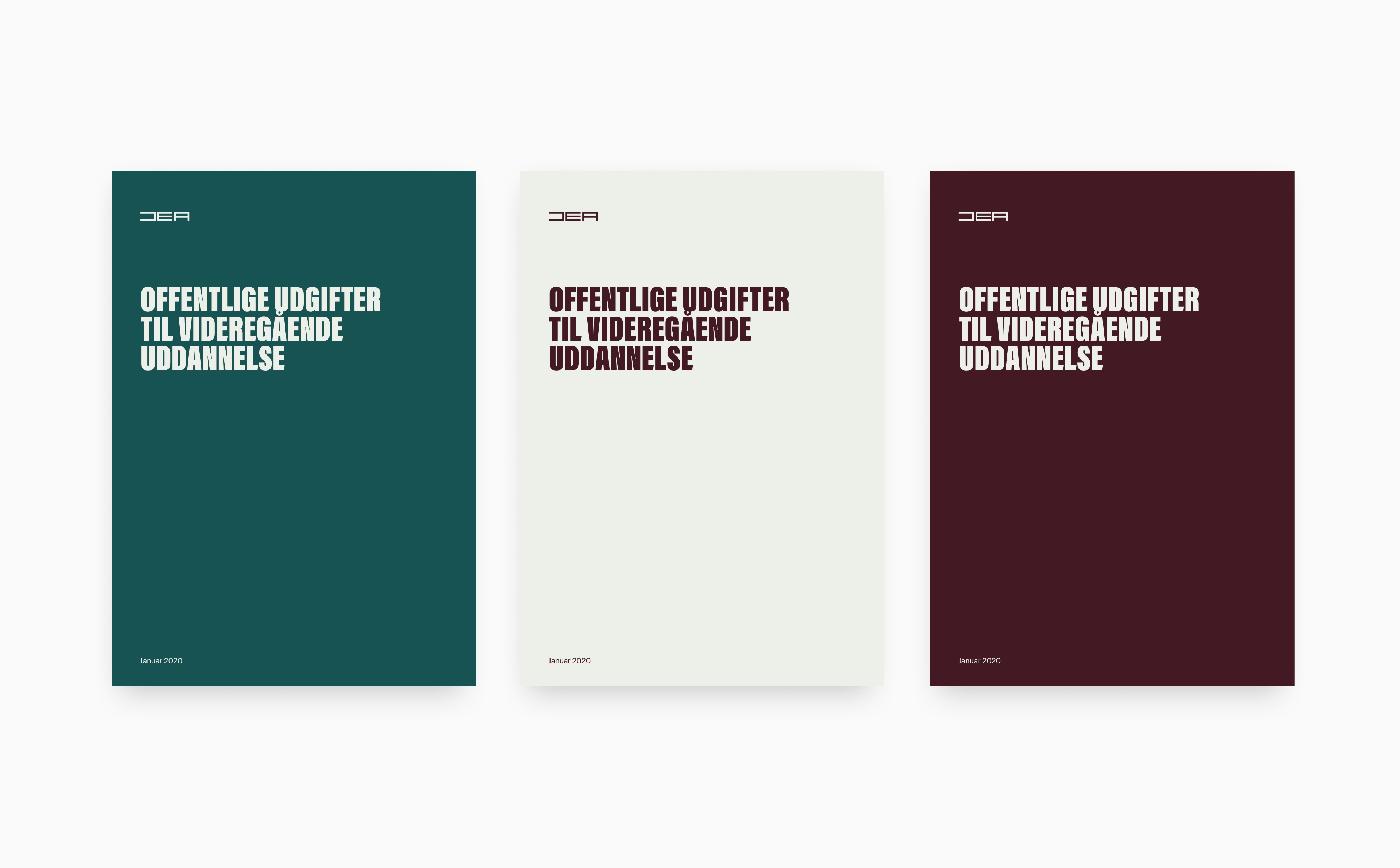
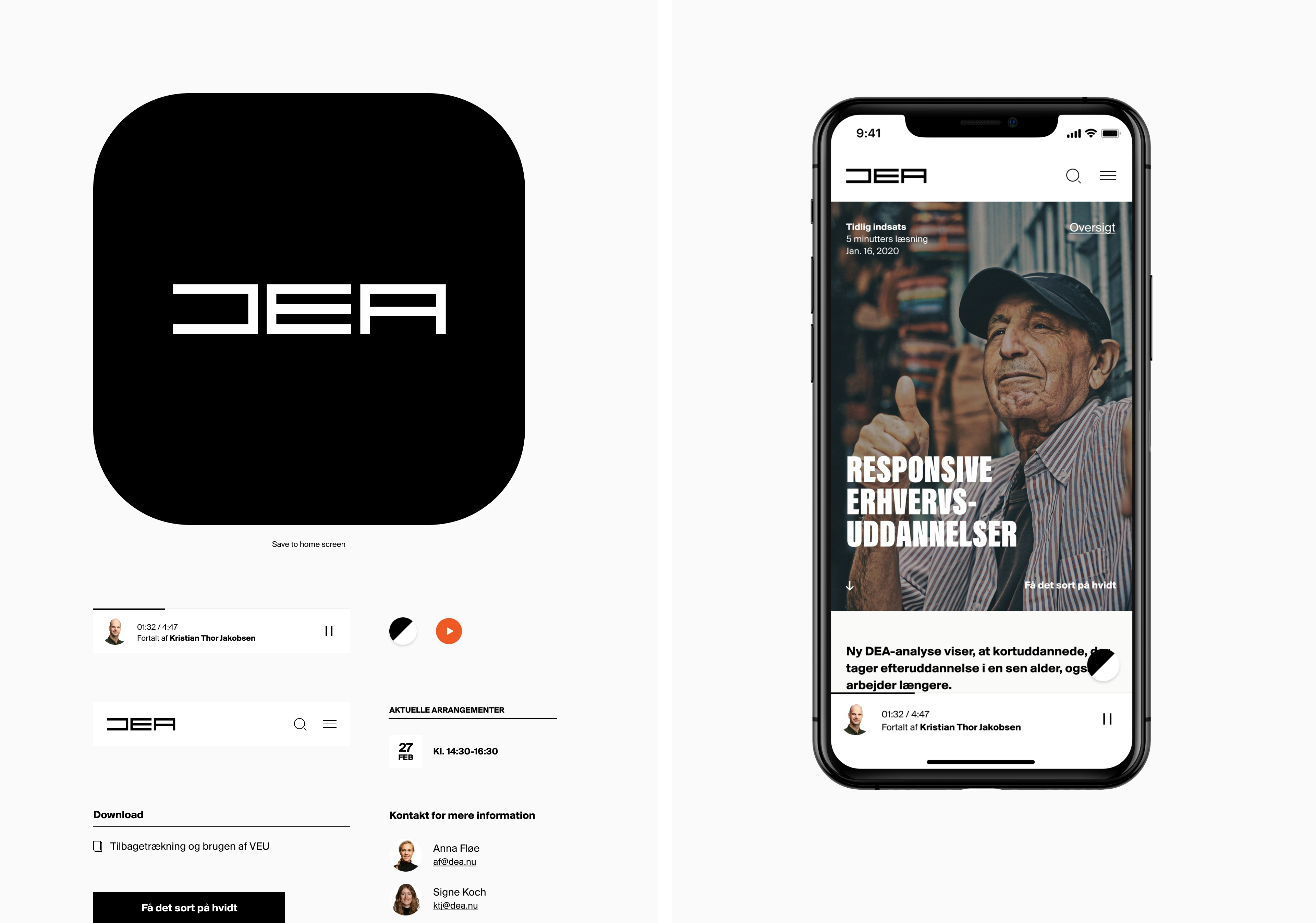
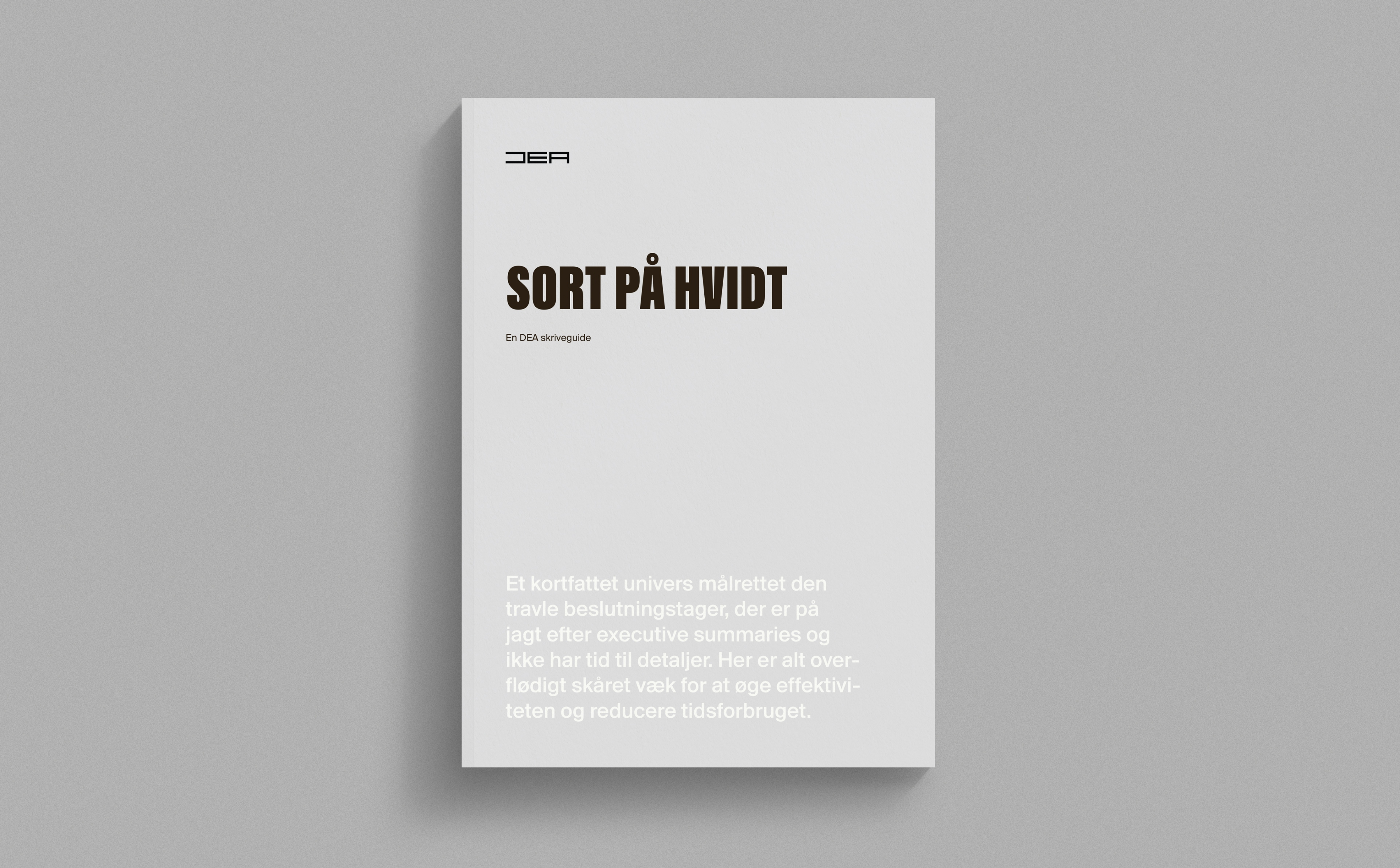
However, DEA's audience of politicians and journalists don't always have the time to read through their long-form research. To address this discrepancy, we clarified their profile through a series of workshops, developed a new visual identity, and produced a two-sided website: one in black-and-white for busy readers to catch the key takeaways; and one dripping with color to highlight their nuanced, detailed work. The result was a sharpened external identity that gave a beautiful and user-friendly experience and also optimized their internal processes.
Two color universes
Novel two-sided web design created a beautiful, user-friendly digital experience
Updated relevance
Clarified profile helped identify their market edge
Internal optimization
Writing workshops and new web layout updated their internal working processes

Kudos to
Project Manager / Sara Friis Bache
Strategist / Malthe Mogensen
Designer / Martin Balle
Developer / Phillip
Related work
Digitaliseringsstyrelsen
One card less
Client: Digitaliseringsstyrelsen
Partnership Lead: Alexander Spliid
Key Focus: App Design
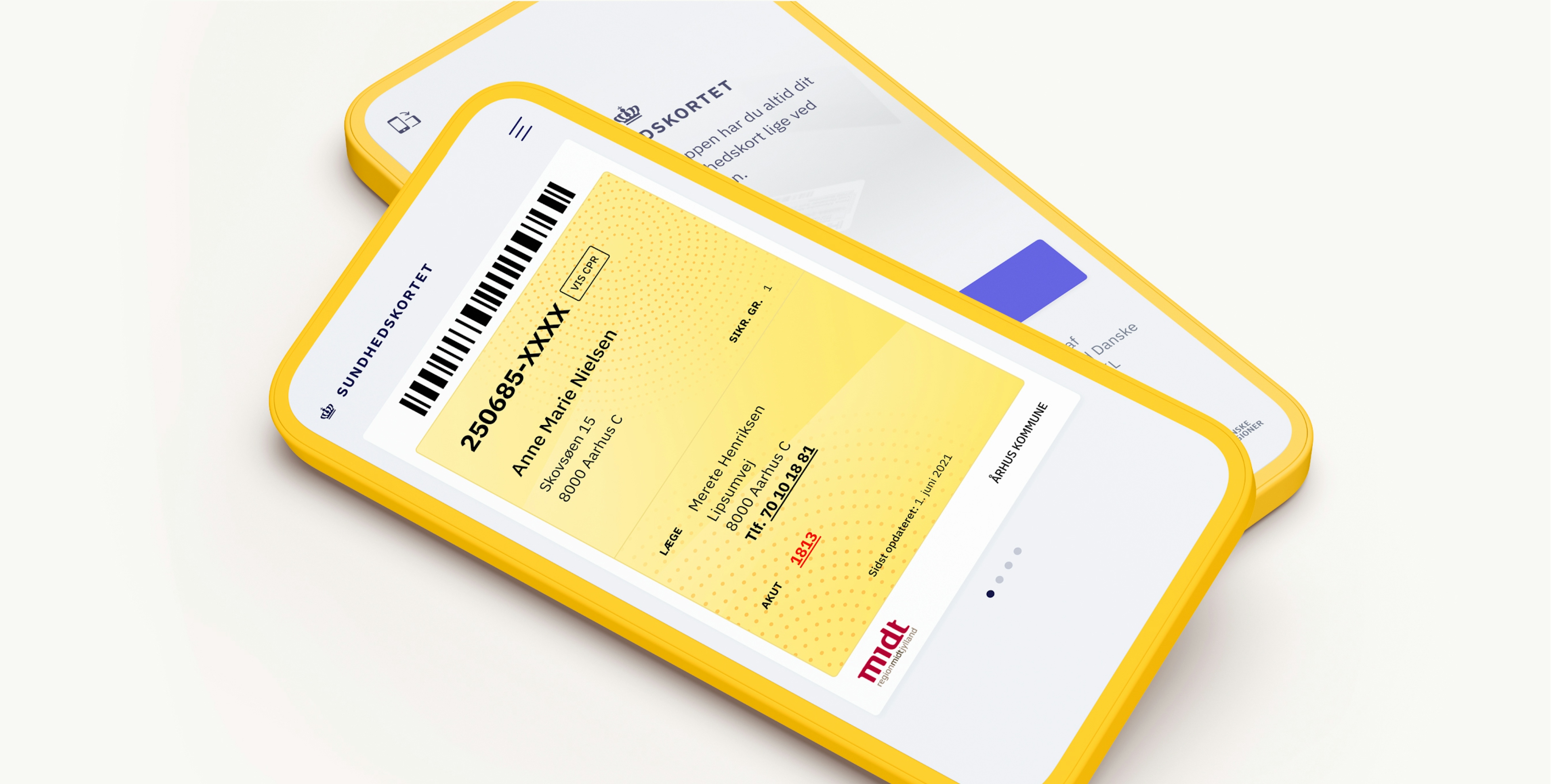
Designing an app that is accessible, intuitive and familiar to all segments of the Danish population is no easy task, but with an established relic like the Danish Health Card (Sygesikringsbeviset), that was non-the-less the job ahead.
Through extensive user testing the final design system was based on three core insights: Make it familiar, make it simple, make it easy to use. Today the (digital) yellow card is an incremental part of the Danish Health System with +2,1 mio. downloads. It allows residents to automatically update their personal health information, change doctors and easily access the Health Cards of their children. A strong example of how human-centred design can improve life for the better.