Montreal Metropolitan Airport
Designing calm in motion
Client: MET
Key Focus: Digital Experience
Timespan: Nov '24 - Oct '25
Stress is the invisible passenger.
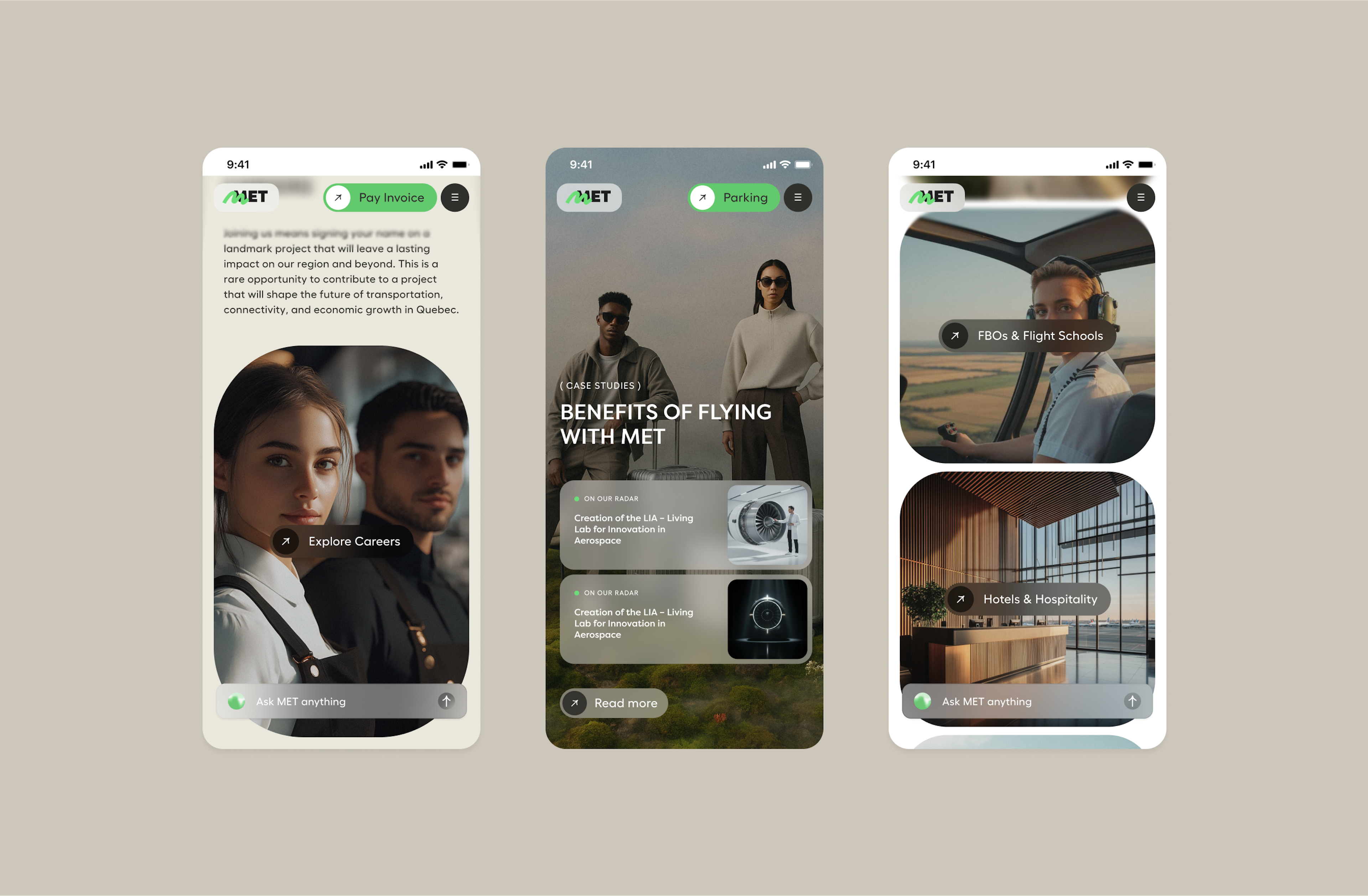
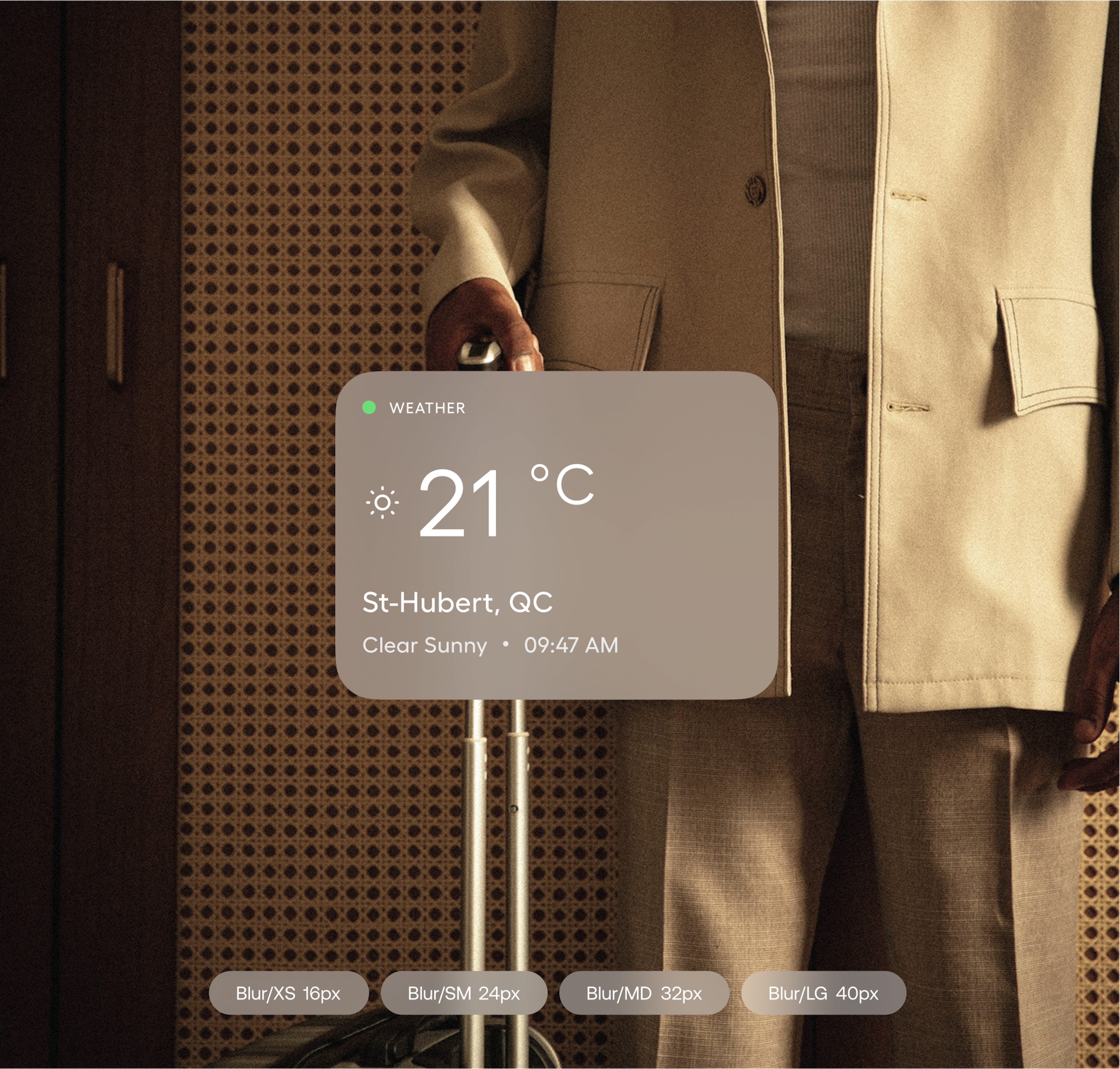
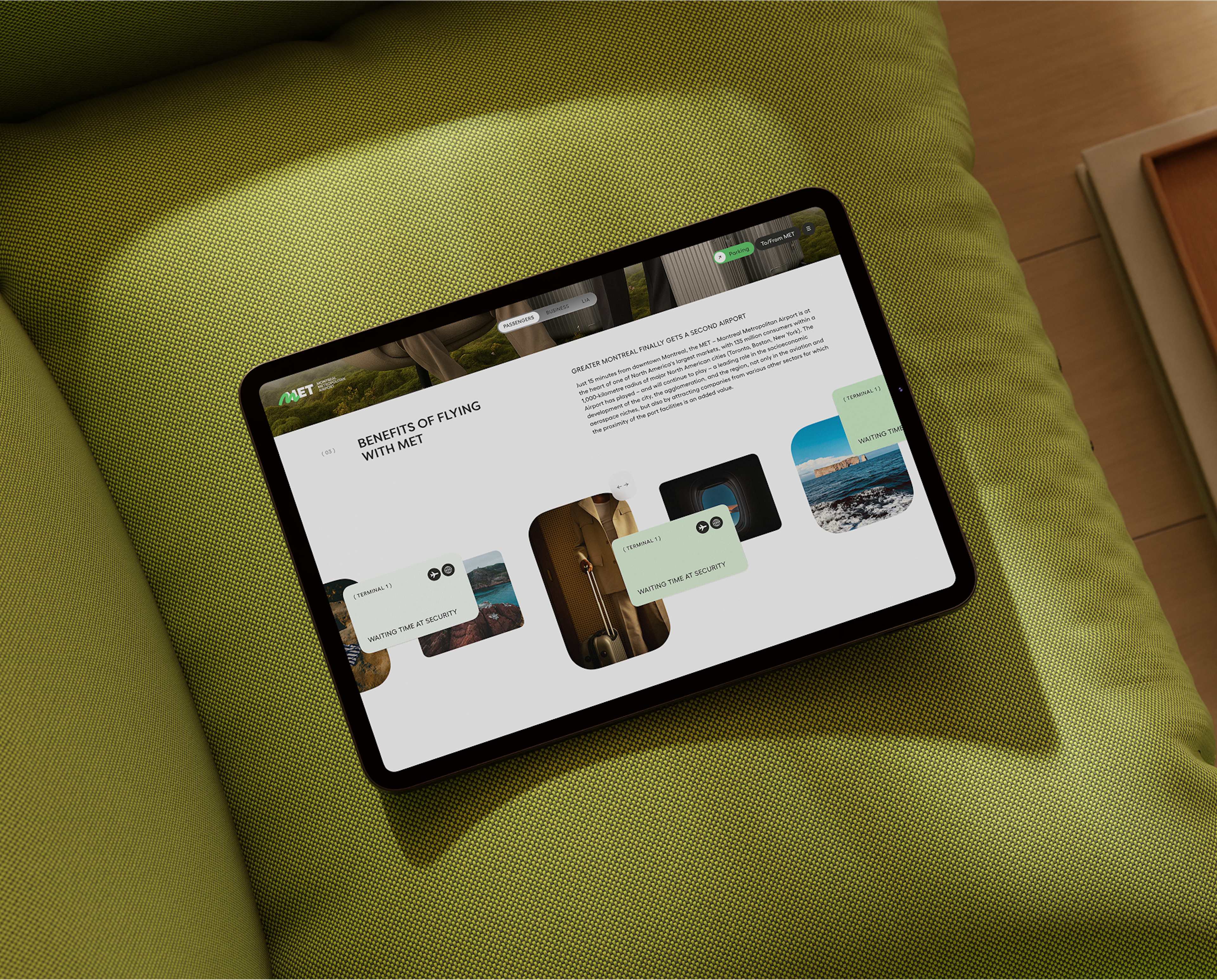
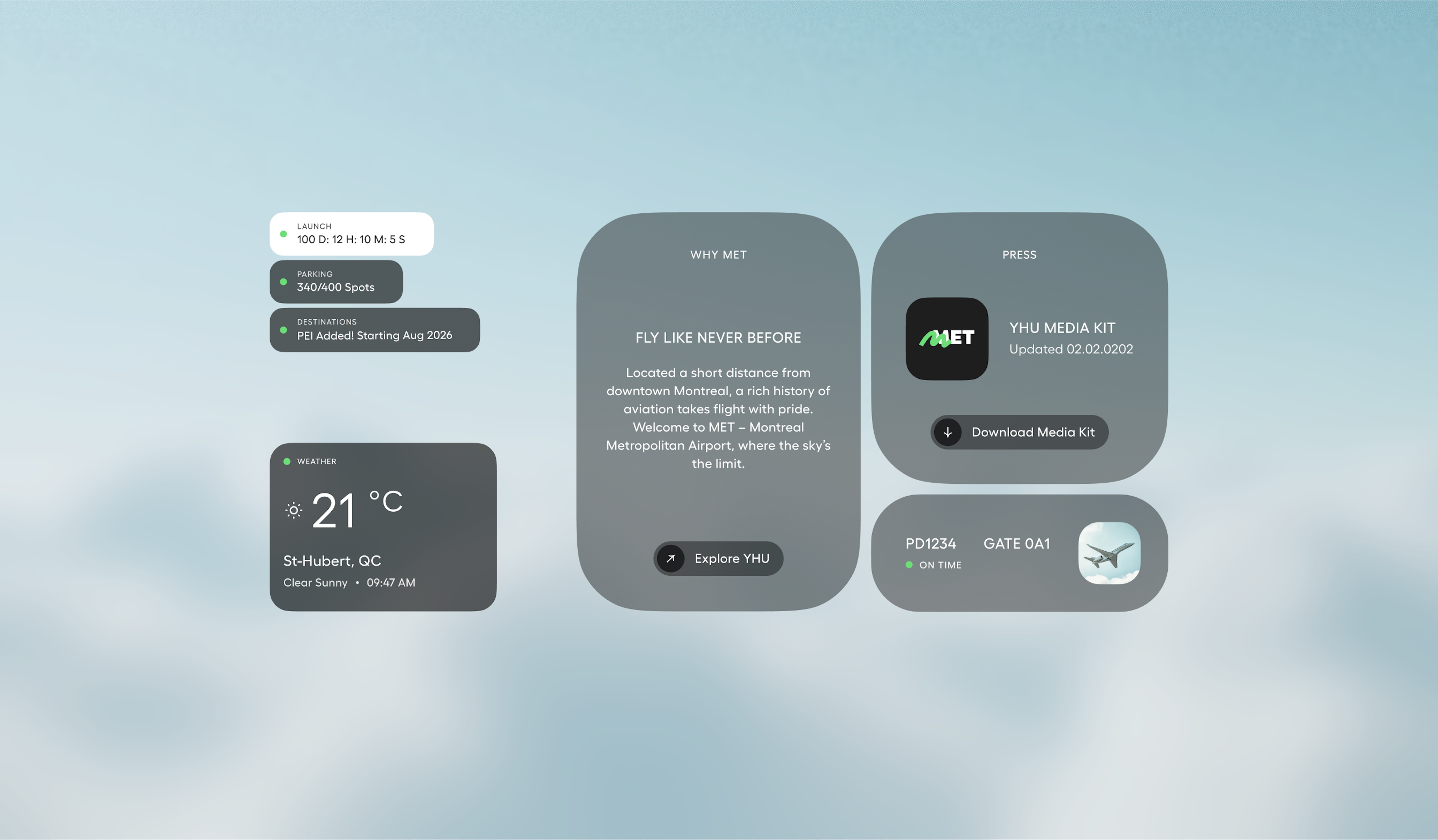
Airports are places of constant movement - arrivals, departures, anticipation, goodbyes. But for most travellers, that movement starts with stress. MET Airport wanted to change that. The mission was to turn its website into a calm, intuitive companion that simplifies the travel experience and builds trust before passengers even reach the terminal. Our research showed travellers often skip airport websites altogether, heading straight to airlines for flight info. Why? Complexity. So we stripped things back. Every pixel of the new MET site was designed to lower cognitive load and raise confidence - a “calm companion” built around mobility, innovation, and organisation.
Human clarity meets digital intelligence.
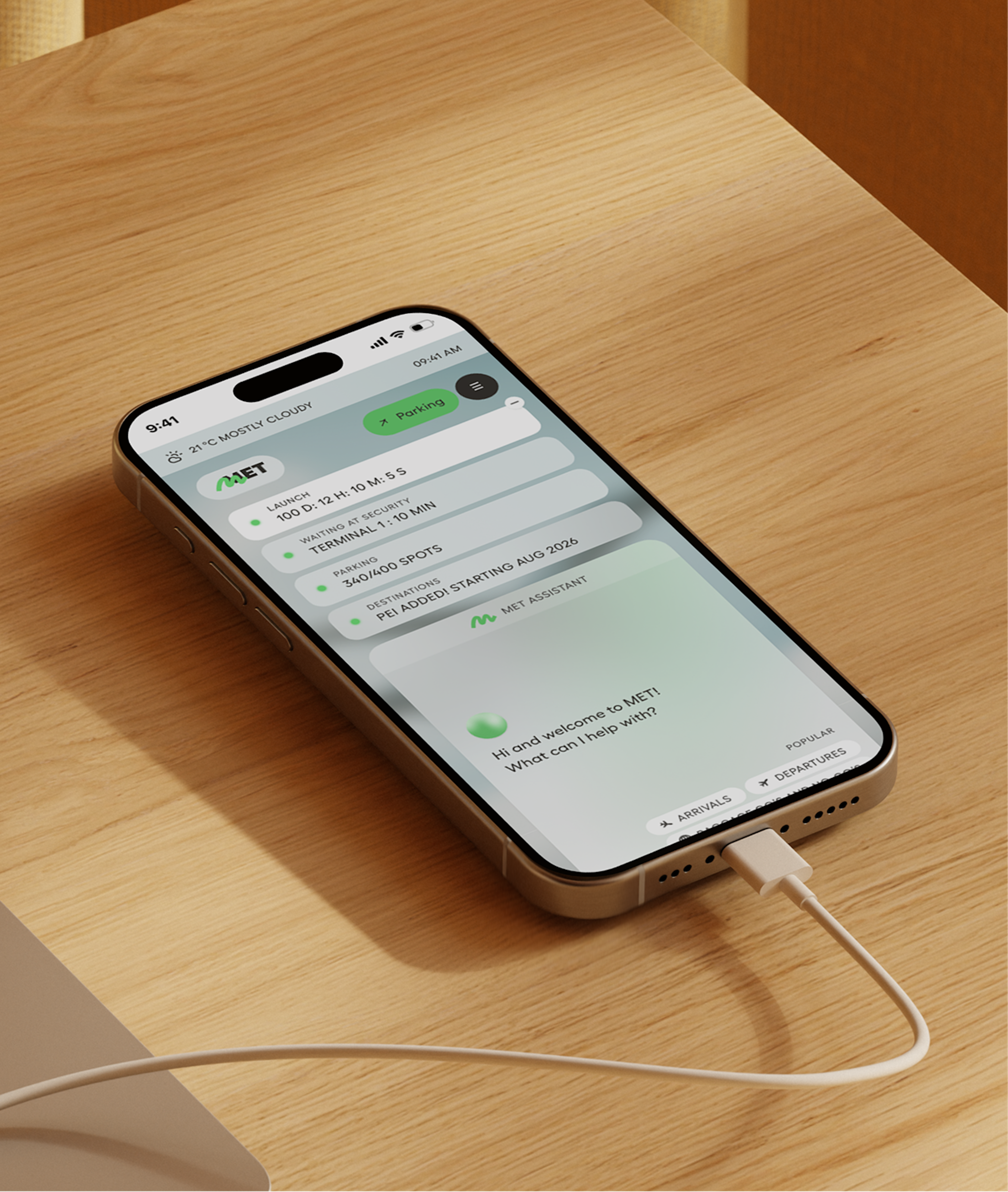
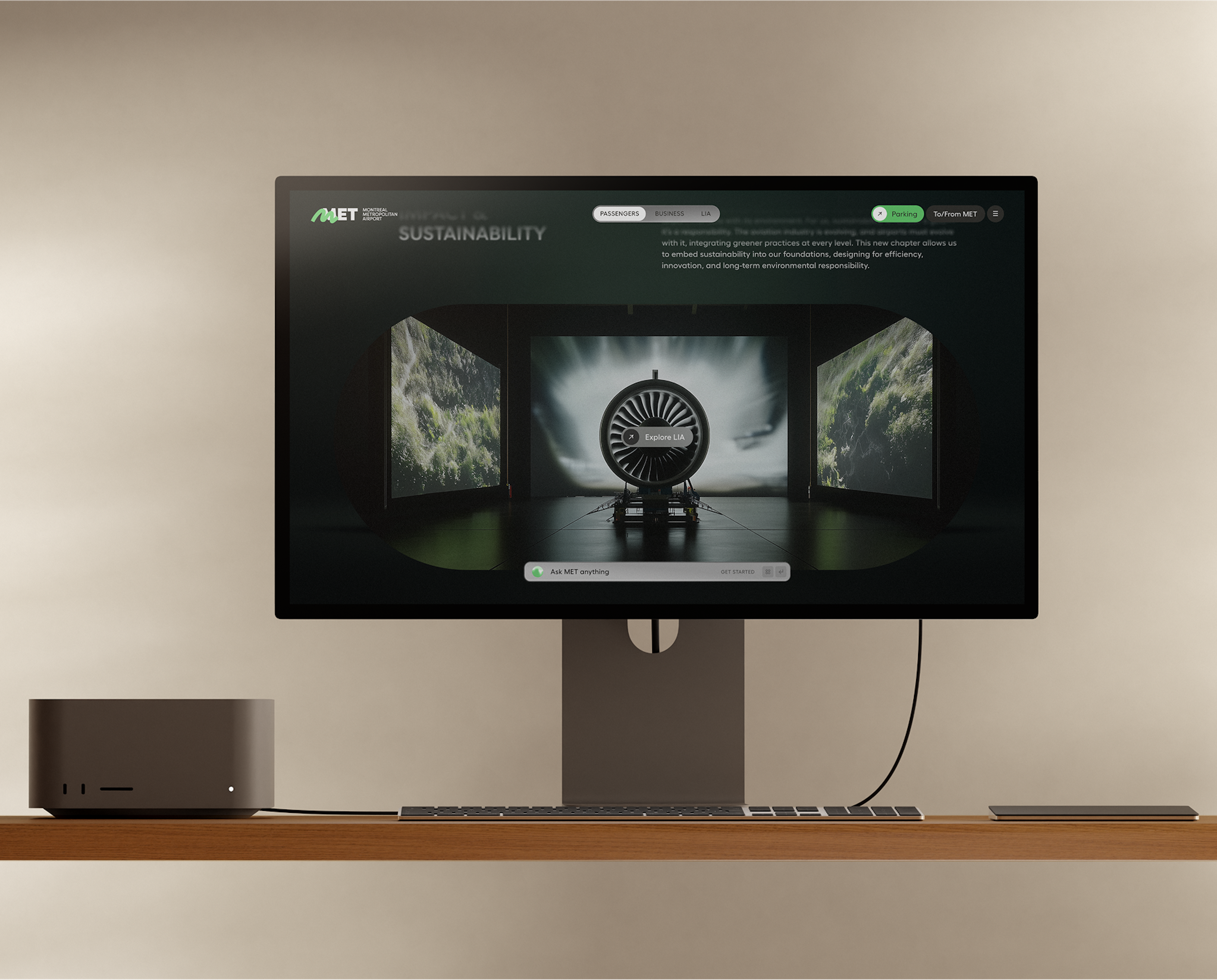
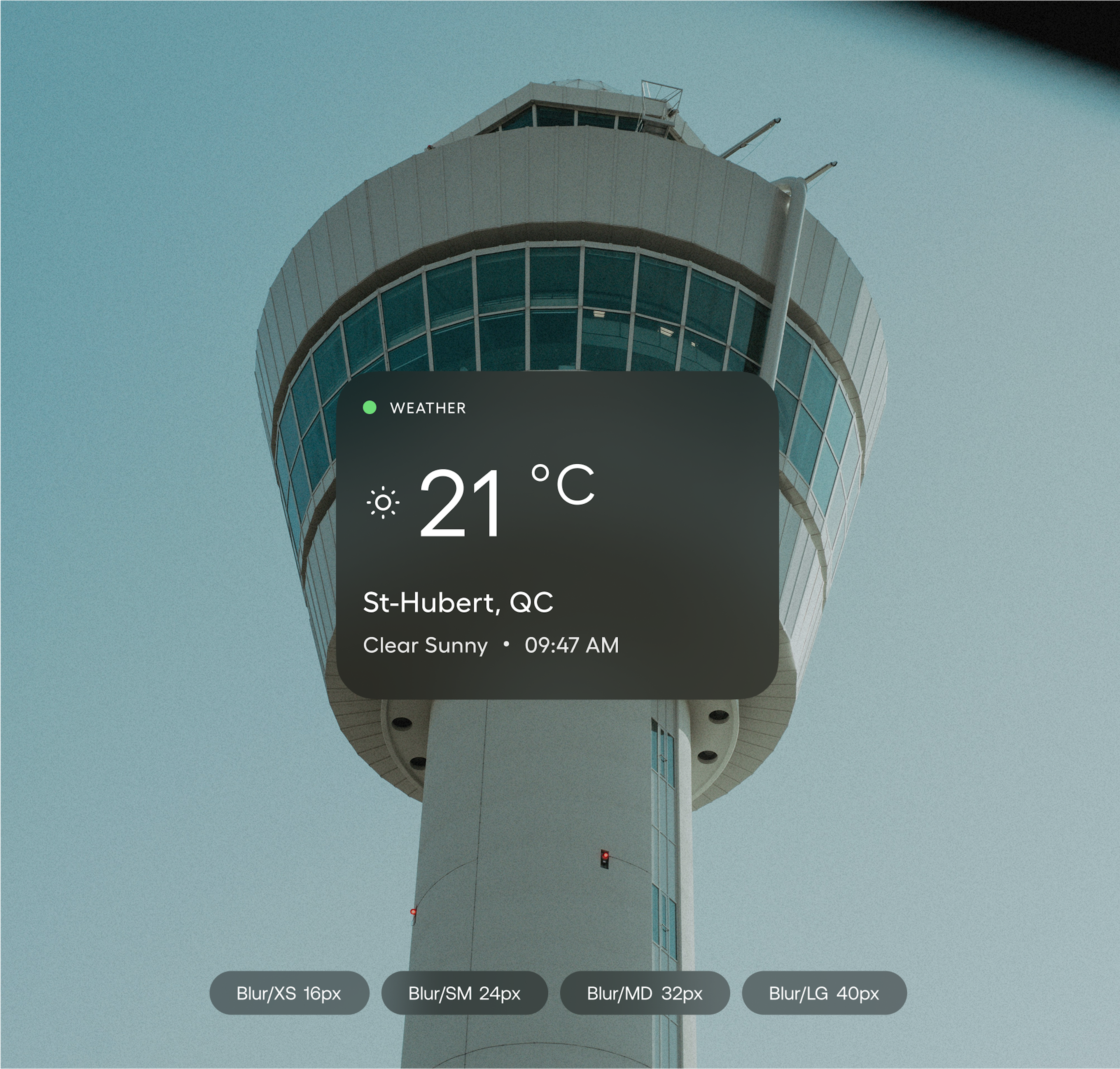
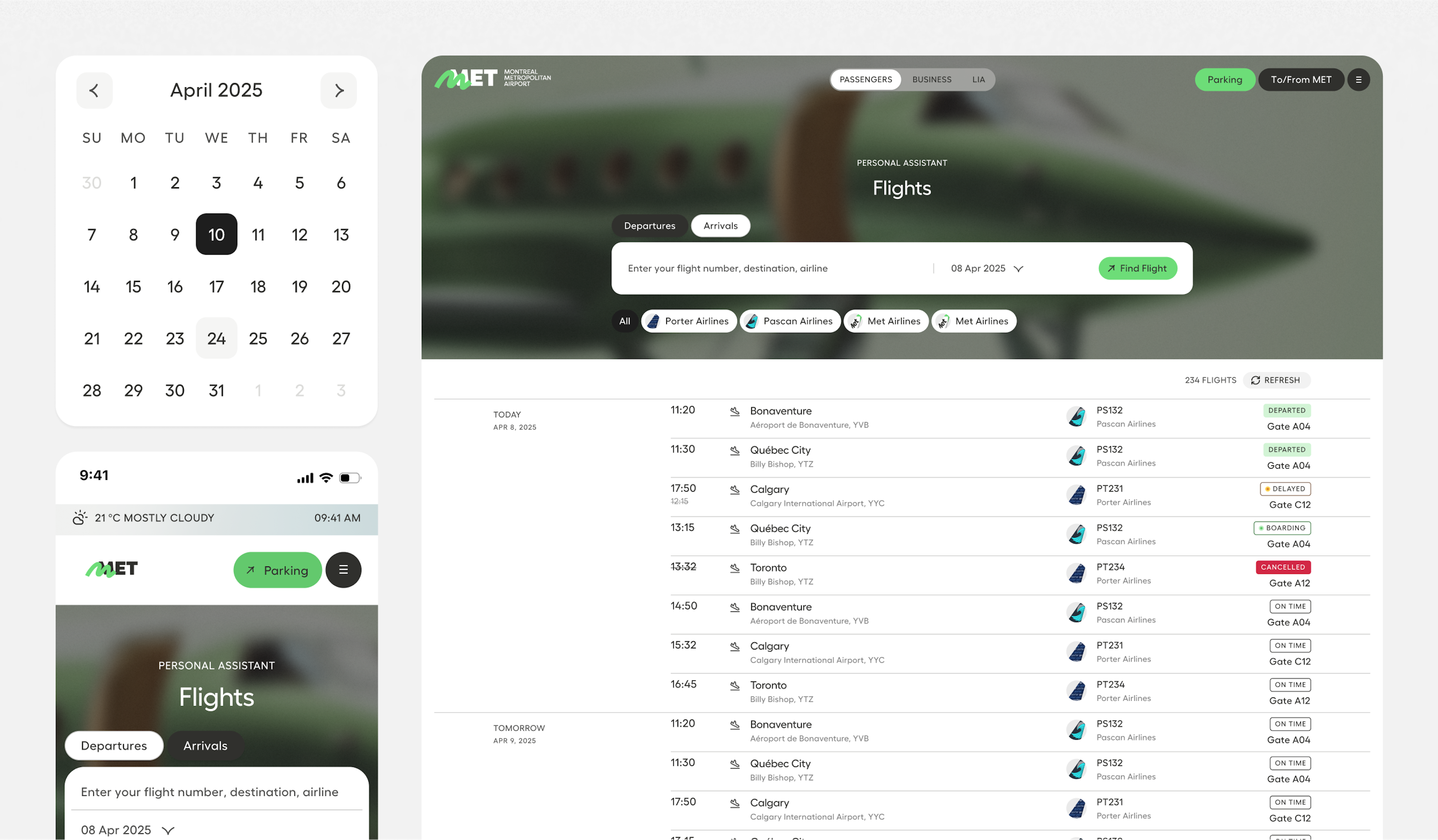
We built a custom AI assistant, trained on airport-specific data, to deliver verified answers instantly - from flight updates to parking and weather. The interface leads with what matters most, front and centre, while inviting users to explore MET’s innovation lab and sustainability initiatives. The result is a site that feels fast, human, and quietly confident.
Travellers now return to MET’s website not out of need, but out of trust. Engagement with key services has risen sharply, and the AI assistant has become a daily digital concierge. It’s more than an airport website - it’s a reimagined welcome, one that turns pre-flight stress into calm, connected confidence.
Kudos to
Project Management / Claire Smale
Client Lead / Yannick Chauvette
Strategist / Sofia Gruchalla-Wesierski
Designer / Alexandre Lee
Designer / Clément Barjon
Developer / Théo Benoit
Developer / Junhwan Im
Developer / Christoffer Skytte Wielsøe
Related work
Akutberedskabet
When every second matters
Client: Region Hovedstadens Akutberedskab
Partnership Lead: Mathilde Ive
Key Focus: UX, Design & Development
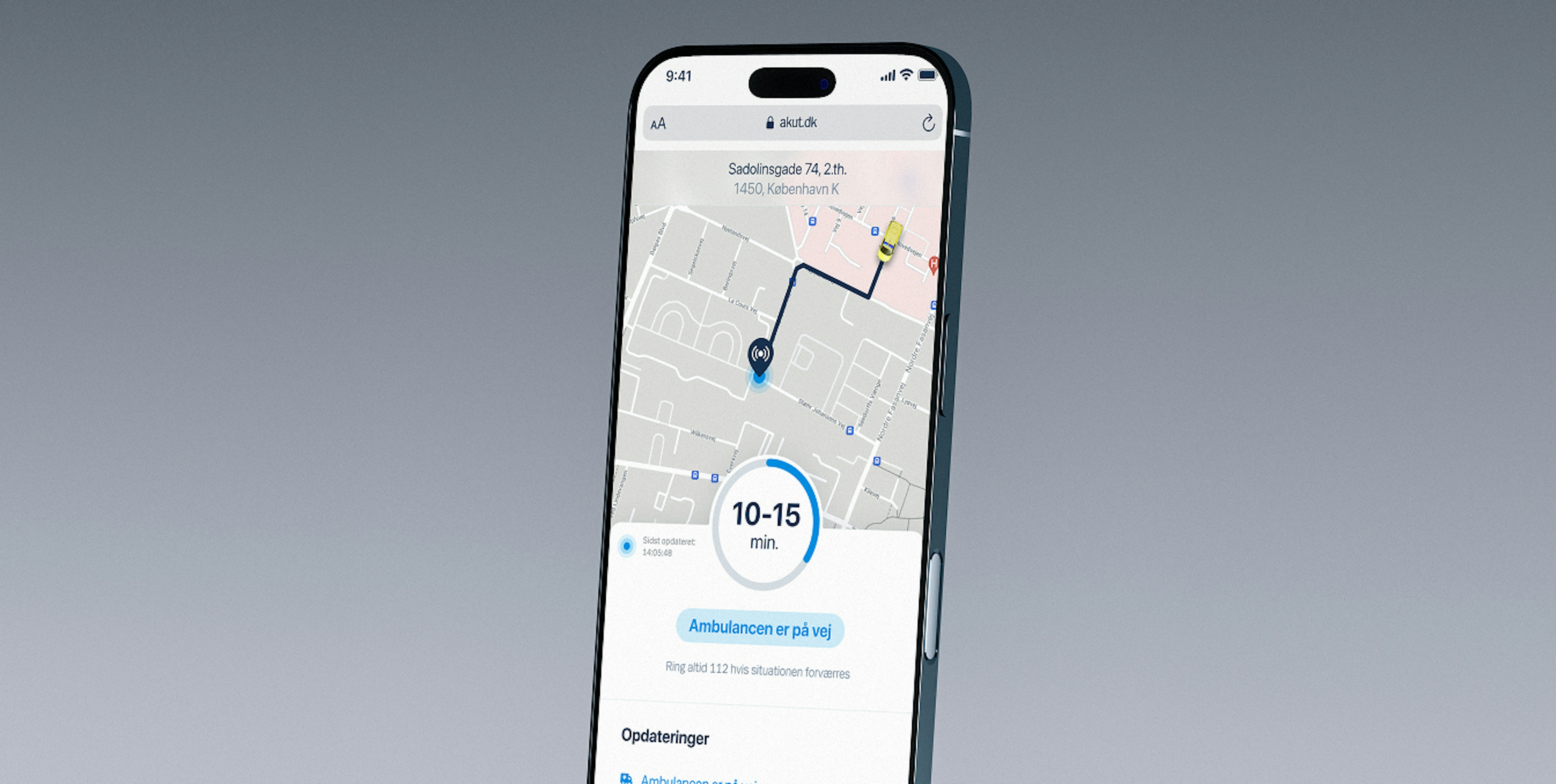
Where’s the ambulance? Waiting for help to arrive is one most nerve-wracking moments in an emergency. But now, thanks to the Capital Region of Denmark, patients can track their ambulance in real time after calling 1813.
It’s a micro-service, but a major improvement to the patient experience. Real-time updates don’t just ease the wait—they also help paramedics by freeing up resources, so they can focus on what really matters: saving lives.
How does it work? Simple by design. After calling 1813, you receive a text with a link to track your ambulance’s ETA and live location. No apps. No hassle. Just clarity when you need it most.